Stage 5: Disibodenberg — Forty Years at the Heart of the Hildegard Way
·
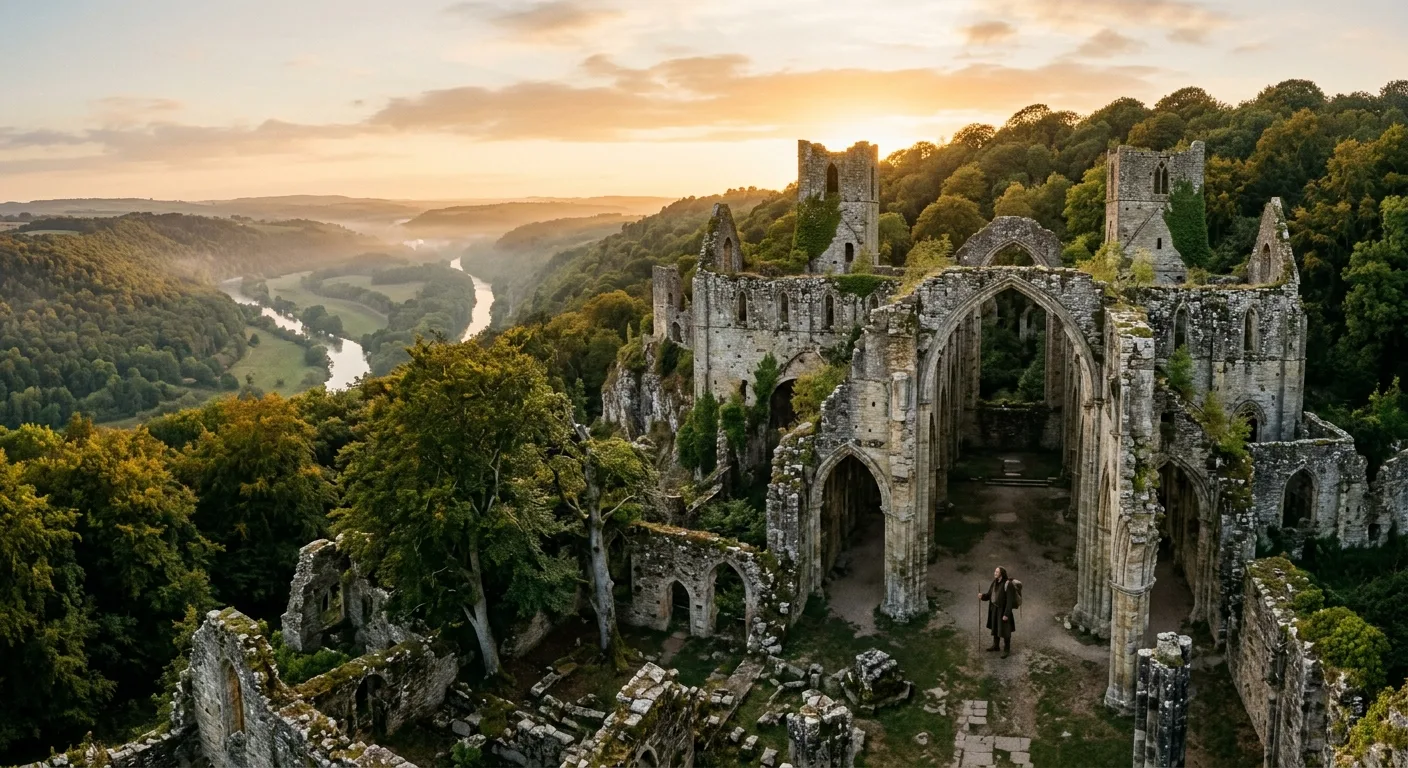
The ruins of Disibodenberg rise from a rocky spur above the confluence of the Glan and Nahe rivers — a place of extraordinary atmosphere that stops most pilgrims in their tracks. Ancient stone walls emerge from the forest. The silence is dense and deliberate. Something was built here, and used, and then time moved through it and left it as it is now: open to the sky, grown over with moss and beech, carrying the weight of eight centuries.
Disibodenberg
This is the heart of the Hildegardweg. Hildegard von Bingen lived here for nearly forty years. She entered as a girl of fourteen and left as a woman of fifty-two. Her most formative decades — her education, her first visions, the writing of the Scivias, the death of her teacher Jutta, her election as magistra — all happened here, in a monastery that no longer stands.
Hildegard Speaks: On Entering the Monastery of St. Disibod
In her text for this fifth stage, theologian and Hildegard scholar Dr. Annette Esser speaks as Hildegard from inside the Hildegard Chapel at Disibodenberg — the most intimate station on the entire trail.
“On All Saints Day, 1112, I — a virgin of 14 years — entered the Monastery of St. Disibod together with Jutta of Sponheim. In the almost 40 years that I lived on the Disibodenberg — where I became the new magistra after Jutta’s death in 1136 — I have seen and learnt a lot. I loved the music. He had come to the Franconian empire in the dark period of the 7th century and he had settled down where his walking stick put into the earth turned green, where a white hind pawed a well of fresh water from the earth and where two rivers united. This was exactly here where I have lived for forty years.”
Hildegard von Bingen, as rendered by Dr. Annette Esser
The Mountain That Shaped Her
The Irish monk Disibod arrived at this hilltop in the 7th century, drawn — according to legend — by signs: a walking staff that took root, a white deer, two rivers meeting below. He built the first Christian monastery on this site. Five centuries later, Hildegard arrived and spent her most formative decades within its walls.
The Disibodenberg was not a small provincial outpost. It had a significant library and scriptorium, access to scholarly works from across Europe, a hospice, a cloister garden, and a community of Benedictine monks whose intellectual life Hildegard could share. She studied Hippocrates, Galen, and Avicenna here. She composed her first songs here. She began the Scivias here, with the monk Volmar as her secretary and the young nun Richardis as her assistant.
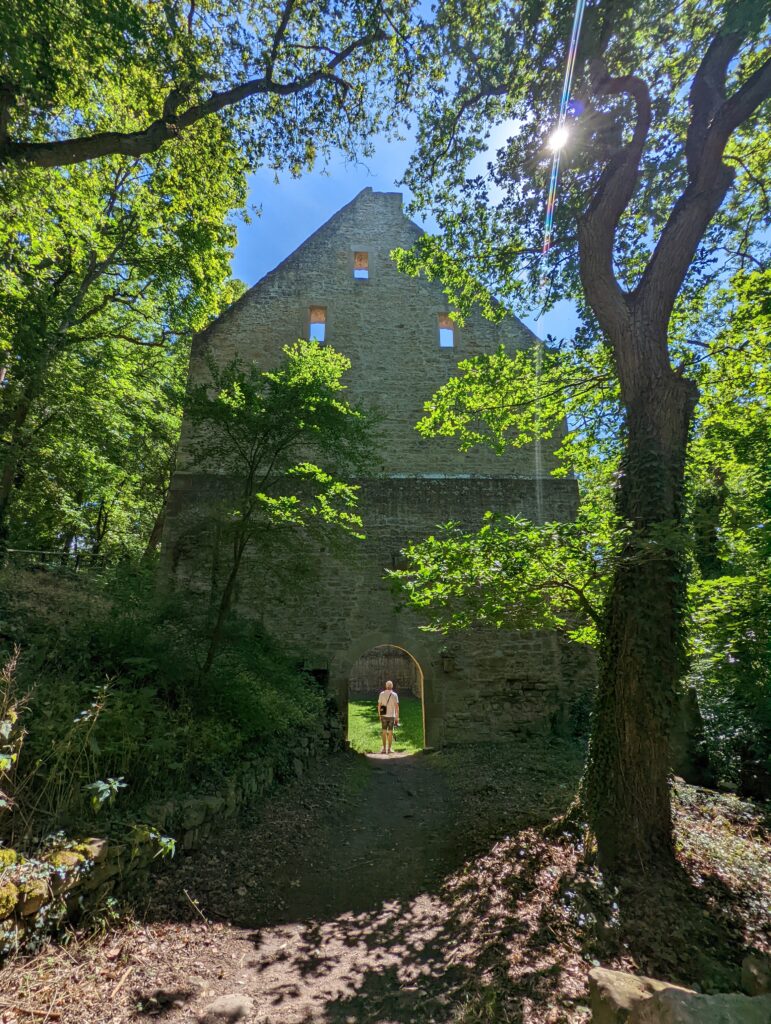
When she finally left — against the resistance of the monks who did not want to lose her — she did not leave because the place had failed her. She left because she had outgrown what it could contain.
Stage 5 — Disibodenberg
Most pilgrims say Disibodenberg is the place that stays with them longest. If you want to stand in those ruins yourself, download our free Pilgrim’s Guide — everything you need to know before you walk the Hildegard Way.
About This Series
This post is part of a ten-stage series walking the Hildegardweg — drawing on Saint Hildegard Speaks by Dr. Annette Esser, published by Crazy Wisdom Publishing. Learn more about the Saint Hildegard Way pilgrimage journey or get in touch.